5.000 colones banknote
Our ¢5.000 bill. The Central Bank of Costa Rica offers new banknotes that incorporate security features identifiable simply by touching, looking at, and tilting the bill.


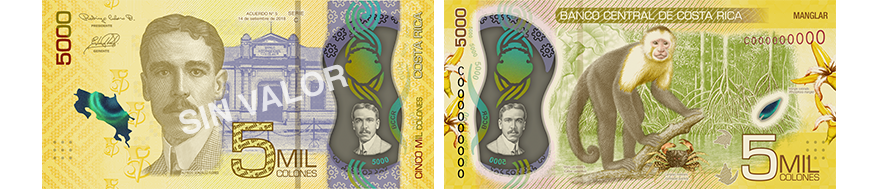
You may check the new banknotes with this simple procedure:
Touch - See - Turn around.
The following video of the new series of banknotes may help you better understand this system and distinguish its security features.
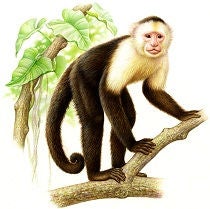
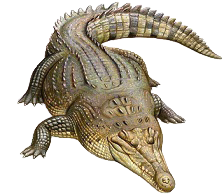
On Costa Rica’s Pacific coast mangroves are located mainly in the mouths of rivers Tempisque, Bebedero, Tarcoles, Térraba, and Sierpe; in the gulfs of Papagago, Nicoya, and Dulce; and in the bays of Santa Elena, Salinas, Tamarindo, and Herradura. On the Caribbean coast they are located in Moín, and in the pond/lake* of Gandoca. Mangroves make up for nearly 1 percent of the country’s territory. During the high tide, these forests are flooded with salt water. In mangroves located on river mouths water is less saline, as it is mixed with fresh water.
A great diversity of species found in mangroves is a result of the fact that in these ecosystems there is a high production of organic matter and there are different environments, which are the result of variations in salinity. These coastal forests are used by huge amounts of sea animals to lay their eggs, feed, and grow, and they also provide shelter and food to significant amounts of birds, mammals, and insects.
In Costa Rica there are several mangrove species, with common names such as red mangrove, silver-leaved buttonwood, black mangrove, and white mangrove, and button mangrove. Shells, crabs, snails, as well as shrimp and fish larvae inhabit their leaves, creating highly complex communities. On their treetops live countless birds such as herons, snakes, white-headed capuchins, raccoons, lizards, and bats. There are also countless crickets, mosquitoes, biting flies, spiders, and scorpions.
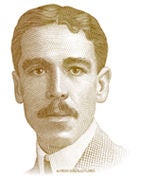
On the 15th of July 1877 there was unusual joy and hustle at the home of Elemberta Flores and Domingo González. She gave birth to one of Costa Rica’s most distinguished citizens - Alfredo González Flores.
He completed high school at the Liceo de Costa Rica, and eventually specialized in Law and Economics. Both of these served to provide the country with highly valuable services - first as a Deputy in Congress, and then as President of the Republic.
In 1910, while serving in Congress, he was appointed as First Designated Member of the President, and as such he was called to exercise as President of the Republic from 1914 to 1917. He came to power because in the 1914 elections no candidate obtained an absolute majority. Thus, a twist of fate gave Costa Rica one of its most progressive governments of all time.
Those who believe that the President would be easily persuadable would be proven wrong. González Flores was a statesman, a visionary man with an extraordinary intellectual capacity. He was convinced that the country needed a change in course to take the path to a more integrated development. His economic and social reforms were definitive, including, for example, the non-convertibility of currency, savings, control of gold reserves, bond issuance, creation of banks, as well as introducing property and income taxes -under the premise that the rich should pay as such, and the poor should pay as such.
González Flores was enlightened and ahead of his time, but his revolutionary measures touched upon major vested interests. Thus, Federico Tinoco, who was his Minister of Defense, overthrew him on the 27th of January 1917. González Flores was exiled in the United States. He remained on the fringes of party politics upon his return to the country, although he did serve the country in countless public offices with dignity and transparency.
Source: Osvaldo Valerín Ramírez, Historian.
Download the official banknote brochures containing more information on new banknotes.
Our ¢5.000 bill. The Central Bank of Costa Rica offers new banknotes that incorporate security features identifiable simply by touching, looking at, and tilting the bill.