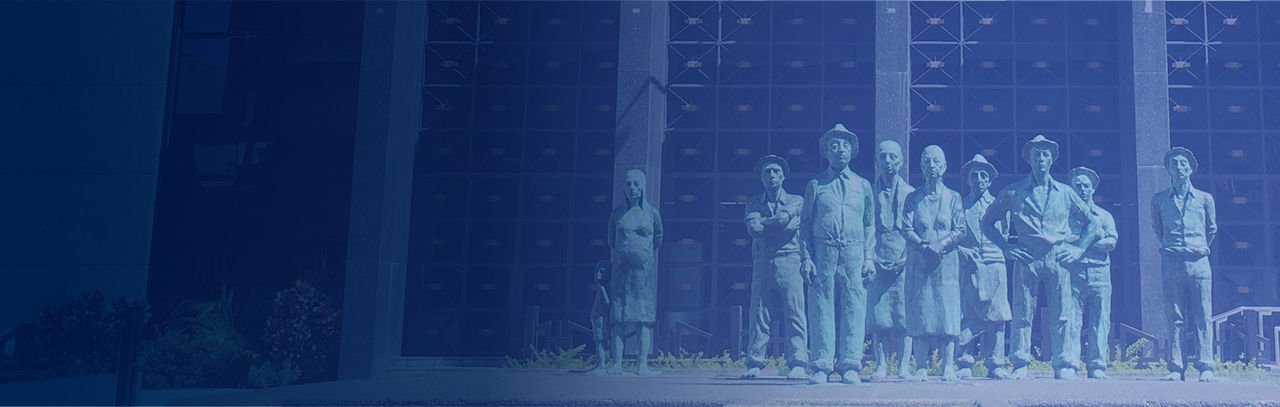
Los Presentes es un conjunto escultórico en bronce del artista costarricense Fernando Calvo, ubicado en la plazoleta exterior del Banco Central de Costa Rica desde 1989. La obra está compuesta por nueve figuras humanas de tamaño natural que representan a los habitantes tradicionales del Valle Central y al campesinado costarricense.

Sinpe Services

Services for Individuals

The National System of Electronic Payments (SINPE), provides a number of financial and support services for clients to perform various operations between financial entities and their clients.

Such financial services allow for funds and securities to be transferred among SINPE members at the client’s request. These services are supported and complemented by support services.

Select the subtopic to view the documents and information.

Automatic Debiting Authorization

To domicile a charge is to issue an authorization so that such funds may be automatically collected. Such an authorization is provided by means of a so-called Orden de Domiciliación (Direct Collection Order). This document should be presented to the client’s financial entity authorizing debiting from their account. This way, payment will be made automatically every time creditors are to collect the funds, in accordance with the conditions in said order. Direct Collection orders may be processed by any of the following means:

With the entity of origin (the client’s entity collecting the funds)

With the provider of goods or services, or both. This is known as direct electronic payment or Pre-Notice of the Direct Payment Order. The debtor goes personally to the individual or juridical person providing the goods/services and fills out a Direct Payment Order. In turn, the individual/juridical person sends the information to its own financial entity, which sends it electronically through SINPE to the debtor’s financial entity.

Once the entity where the client has the "cuenta cliente" to be debited receives the Direct Payment Order, it is recorded in its internal systems, so as to authorize payments to be received through Direct Debiting.​

With the destination entity (the client’s entity from which funds are debited)

A "Domiciliación física del cobro" or direct collection order is processed with the debtor’s financial entity. In this case the debtor, after privately negotiating with their provider of goods/services, goes to the financial entity where they keep an account, and fills out a Direct Collection Order (i.e., Direct Debiting Authorization). Information included in the Order is recorded in this entity’s information systems.

The following information is required to carry out either of the two previously mentioned procedures:

Information about the person who pays for the service:

  • Complete name.
  • Identification number.
  • Customer account number.
  • Iban account.
  • Currency of the account: colones or dollars. Inclusion of maximum amounts that may be debited every time.
  • Deadline: the last date for which the amount to be deducted from the specified account is authorized.
  • Signature - An order must be signed by the authorized person.

Information about the person requesting the payment:

  • Name of the individual or corporation authorized to request the payment
  • Identification number

Information about the payment requested:

  • Name of the service: indicate the service authorized (payment of electricity, magazine subscription, etc.)
  • Service code: code that identifies the service being paid (water-meter number, subscription number, etc.)
  • In the name of: name of the person or corporation affiliated with the service; payments are not limited only to the account holder, but may also be made to other persons or corporations.
  • Both procedures are carried out on a 2-working-day cycle (T+2), and the costumer may process the debit after the direct debit order has been authorized.

Related Document

Automatic Debiting Authorization (Spanish)

The validity of the direct debit order begins only after the authorization processes established in the "Complementary Standard - Automatic Debit Authorization" are completed.
Physical Standard (Spanish)

The purpose of this document is to establish the rules that physically standardize the forms of the “Direct Debit Order” used in the Costa Rican Financial System in the Direct Debit Compensation and Real Time Debit services.

Checks

This service was launched in April 1997. It is designed for financial entities to cash checks received from their clients, and issued by a different bank.

Funds from checks sent for clearing on a given day will be credited to the beneficiaries’ accounts at the latest by noon of the following working day; this period is specified in the regulatory framework for these services, and financial entities are compelled to comply with it.

At present, all check-issuing financial entities in the country use this service to collect and pay the funds from checks received from their clients.

Using the services

Whenever an individual/juridical person receives a check, they have two possibilities to obtain their funds:

  • First, they may go to the financial entity issuing the check and cash it, with the client taking the risk of moving with the funds in cash.
  • The second option is to deposit the check in the financial entity in which you keep your account. If it is the same entity against which the check was drawn, the customer will have the corresponding credit in his or her account on the same day. However, if the check is from a different entity, the entity that receives it as a deposit will send it to be cleared through this service, and the funds should be credited at the latest at 12:00 p.m. of the following working day.

Advantages

For the individual/juridical person cashing the funds:

  • The timeframe for their financial entity to credit the funds to their account is regulated.
  • There is the possibility of filing a claim with the client’s own entity, if the funds are not credited within said timeframe. If the financial entity is unable to solve the claim, another claim may be submitted to BCCR. Claims may also be filed if the client’s financial entity should fail to credit the funds altogether [More information]
  • The collection process is improved, as clients receive timely information on any uncollected checks, so they may do the collection procedure again.
  • There are fewer security risks, since cash does not have to be moved from one financial entity to another to make a deposit.​

Working h​ours

The Check Clearing and Liquidation service operates from Monday through Friday, except on holidays decreed by the Government, on a 2-working-day cycle. This means that any collection procedure carried out by a financial entity on a given day will allow the beneficiary to have the funds resulting from that operation in ​his or her account at the latest by noon of the following working day.
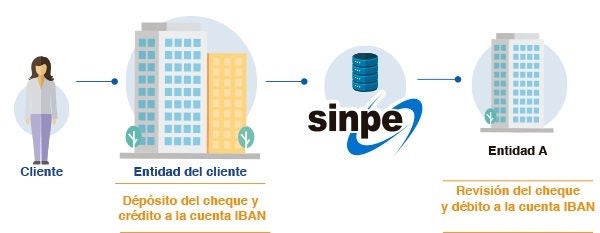
Diagrama que muestra cómo dos entidades bancarias (A y B) intercambian un cheque a través del sistema SINPE.


Related documents​

System of Payment Regulations (Spanish)

This regulation governs the organization and operation of the National Electronic Payments System (SINPE), administered by the Central Bank of Costa Rica (BCCR), with the objective of promoting efficiency and the normal functioning of the Costa Rican payment system.

Debiting in real time

The Debiting in Real Time (DRT, in Spanish) which was launched in 2005. It is intended for individuals and juridical persons offering goods or services and in need of doing some kind of collection from their own bank. The procedure may be done regardless of the place both parties are geographically speaking, and of the bank they have their account with.

To use this service, an automatic debiting authorization from the debtor’s Cuenta Iban is required, so that the operation may be subsequently sent for collection.

The client must do the procedure to obtain the debiting authorization periodically.

The charge for this service depends on the bank where it is done. Each bank has established its own fees, which may be consulted in the Fees and Charges section, under "Fees char​ged by Financial Entities".

Opportunity to use the service

The Debiting in Real Time service may be used for any collection that needs to be confirmed, so as to ensure that funds are received. This service is more often used to collect tariffs to bring imported merchandize into the country.

Workin​g hours

The amounts of collected transactions sent on any given day are confirmed or rejected in real time by the entity debiting the amount, and funds are actually credited in real time on the date of the transaction.​

Example of use

Custom duties are an example of collections done by means of this service.

The following steps are taken in this cases:

  • The customs agent presents the papers to the General Directorate of Customs (GDC) which, after reviewing the document, sends a debit through SINPE.
  • The order is received by the custom agent’s bank. This document serves as an authorization for the procedure, and as proof that the amount in question is available in the account.
  • Then the financial entity approves or rejects the operation in real time. If rejected, the GDC informs the agent of the reason why it was turned down, and the agent should take the necessary steps for its subsequent processing. If ap​proved, the merchandise is released to the agent, and the GDC will have the funds from the operation in real time, on the same day the operation is processed.

Related documents

System of Payments Regulations (spanish)​

This regulation governs the organization and operation of the National Electronic Payments System (SINPE), administered by the Central Bank of Costa Rica (BCCR), with the objective of promoting efficiency and the normal functioning of the Costa Rican payment system.

Direct Crediting

Launched in June 2001, this service is designed so that individuals and juridical persons may do, through their own financial entity, large-scale payments to any Cuenta Iban, regardless of the geographical location of the financial entities where such payments are to be processed.

To do payments by means of this service, you only have to send an electronic file to your financial entity in the format your financial entity may indicate, including detailed information on the payment(s) to be done such as:

  • Cuenta Iban were funds are to be deposited (Beneficiary)
  • Identification of the addressee (Beneficiary) and of the sender (Payor).

The fee charged for this service is determined by the financial entity processing the transaction. Fees may be checked on the section on Fees and Charges, under Fees charged by financial entities.

Using this service

The Direct Crediting service may be used to make periodic, massive payments, for example:

  • Payrolls
  • Pension lists
  • Payments to providers
  • Any other periodic and massive payments
  • This service is convenient for doing periodic payments, since, SINPE offers the Transfers to Third Parties service for periodic sporadic payments to be done online.

Advantages

For the individual/juridical person processing the payment:

  • Regular payments - A client may establish business relations with providers, or pay salaries, without them having to have an account with the same financial entity, since payments are made to any account as indicated.
  • More efficiency in payments - All you need to do is send an electronic file to your financial entity with the "payroll" or list of payments to be made, in the format and other requirements defined by the financial entity. Moreover, you will receive information on which accounts could not be paid, so you may take the steps to correct the situation.

For the individual/juridical person receiving the payment:

  • Funds are received easily and safely - Funds are electronically credited to your account, thereby eliminating the risk of theft or loss.
  • Funds may be deposited to the financial entity of your choice, so there is no need to open an account with the same financial entity of the payer.
  • Regulated terms for fund crediting - If the financial entity does not credit the amount to the account at the time established in the regulations at most, the client may file a claim.

Working Hours

Payment transactions are credited the following working day at most. In case a transaction could not be made the financial entity will inform you the reason.

Example of Use

A company may pay its payroll this service. To this end, it should send its financial entity an electronic file with the Cuenta Iban (regardless of where the company itself and its employees keep their accounts), also indicating the amounts to be credited to each beneficiary.  This file should meet the requirements and format required by each financial entity, so that the payments are made through SINPE.

The following information should be provided: ID Card number and Cuenta Iban of the beneficiaries, amount and currency, name and ID card/Incorporation Number of the payer, date when payments should be processed, and any other detail the financial entity may require.
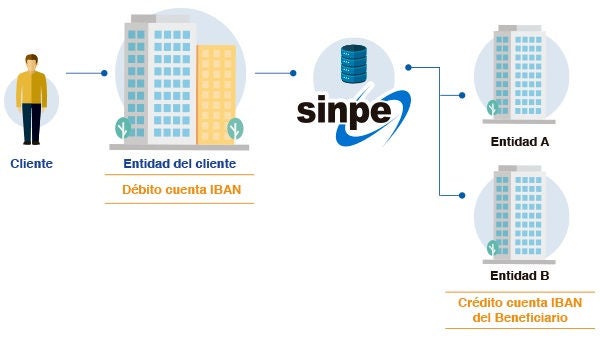
Diagrama de flujo para transferencias SINPE


Related Documents

System of Payment Regulations (spanish)

This regulation governs the organization and operation of the National Electronic Payments System (SINPE), administered by the Central Bank of Costa Rica (BCCR), with the objective of promoting efficiency and the normal functioning of the Costa Rican payment system.

Direct Debiting

This service was launched in December 2001, and it is used to make periodic payments, such as installments for acquisition of goods and services, subscriptions, membership fees, and so forth.

It is designed for individuals and juridical persons to do periodic, large-scale collections through their financial entities, from their clients’ accounts for the sale of goods or services, regardless of the geographical location of their debtors and of their financial entity.

To process payments, a debtor only has to authorize debiting from their account, in keeping with the characteristics agreed with the vendor. This is done through a Direct Debiting Authorization (orden de domicialiación.)

The fee charged for this service depends on the financial entity where the procedure is done. Each entity has its own fees, which may be consulted on the Fees & Charges section, at Fees Charged by Financial Entities.

Using this service

The Direct Debiting Service may be used for periodic, large-scale collections, for example:

  • Credit sales
  • Utilities (Electricity, water, telephone, Internet)
  • Rentals
  • School/university tuition fees
  • Subscriptions/memberships (newspapers, gym, magazines, clubs.)
  • Insurance
  • Articles sold on credit
  • Accounts receivable
  • Loans
  • Credit cards, etc.

Advantages

For the individual/juridical person collecting the payment:

  • Collections can be made in an easy, timely fashion: The providers of goods or services are not forced to keep and account at the same financial entity as their clients, since such collections can be made between different financial entities.
  • Funds are safely received:  Collected funds are received electronically, thereby eliminating the risk of theft and robbery, as opposed to traditional methods such as cash and checks.
  • Regulation of terms for fund crediting - If funds were not credited to your account at the time defined in the corresponding regulations, a client may file a claim.
  • Accounts receivable are kept up to date:  Because there is no need to wait for clients to make their payments, but instead are collections processed on a specified date, there will be less of a chance for backlogs in your accounts receivable, while also reducing the cost of collecting them after the agreed date.

For the physical/juridical person making a payment:

  • More efficiency in payments - A customer obtaining a good or service for which it has to make periodic payments should do a Debiting Authorization procedure only once, so that providers can collect their payments without the customer having to go physically or move any cash. Hence the savings in cost such as paying a person to make the payment through conventional methods, generation of interest due to delinquency payments, and the opportunity cost due to suspension of a service.
  • More geographical coverage:  Debiting authorizations may be requested anywhere in the country and with any financial entity where interested parties may keep their accounts, since this system has country-wide coverage.
  • Risk of loss and theft is eliminated, as payments are made electronically and automatically.

Working hours

The Direct Debiting service operates on SINPE’s working days, within a 2 working-day cycle. This means that for any payment collection processed through your financial entity on any given day, funds will be available in your account by 10:00 am of the following working day at most.

Example of use

You go shopping using your credit card, and therefore each month you have to actually have to go to the issuing financial entity to make your payment. This means you have to spend time and money on this on a regular basis, aside from the risk involved in moving with the cash.

To prevent this situation, you come to an agreement with the card’s issuer, authorizing it to automatically debit the amount from your Cuenta Iban every month. This way, you will not incur in interest due to delinquency payments, as your credit will be up-to-date, while the issuing financial entity will also make its collections regularly and in a cost-effective manner.

Diagrama de flujo para transferencias SINPE


Related documents

System of Payment Regulations (spanish)

This regulation governs the organization and operation of the National Electronic Payments System (SINPE), administered by the Central Bank of Costa Rica (BCCR), with the objective of promoting efficiency and the normal functioning of the Costa Rican payment system.

Inmediate payments

This service was launched in March 2000, allowing users to move funds between "Cuenta Iban" from various financial entities. Transactions are done in real time. This means that after a transaction is sent by SINPE, funds are credited to the destination account within seconds, 24/7, all year long. Each entity processes transactions according to its own policy. Fees charged for transfers to third parties are fixed by the entity where they are processed. All fees may be checked at the section on Fees and Charges, under Fees charged by Financial Entities.

Opportunity to use the service

Transfers to third parties may be done to make payments immediately in cases where time is key, in contrast with Direct Crediting, where periodic payments may be scheduled ahead of time.

Advantages

  • There is no risk involved, as money is not physically moved from one place to another.
  • Depending on the service offered by an entity, there is no need for the client to go to the entity, so transactions may be done entirely from a computer.
  • Both in the case of the party sending the money and that of the recipient, account balances may be checked immediately after the transaction.
  • Clients have the backing from BCCR’s Systems of Payments Department, should they need to file a claim for a service received or because funds were not credited within the timeframe set by policy.

Working hours

Transactions are credited in real time to the destination client. Likewise, if it were not possible to process a transaction, funds should also be returned in real time to the ordering client.

Necessary information

Following is the information to be provided: ID card number and recipient’s Cuenta Iban ; amount and transaction currency; payee’s name and ID card; transaction date and any other detail the entity may request.

Related documents

System of Payments Regulations (Spanish)

This regulation governs the organization and operation of the National Electronic Payments System (SINPE), administered by the Central Bank of Costa Rica (BCCR), with the objective of promoting efficiency and the normal functioning of the Costa Rican payment system.

Service Regulations

Norma Complementaria – Crédito​s Directos​

This regulation establishes the rules and provisions of a complementary nature to the Payment System Regulation, with respect to the service called Direct Credit Compensation (CCD).


Norma Complementaria – Sinpe Móvil

This regulation establishes the rules and provisions of a complementary nature to the Payment System Regulations for the Sinpe Móvil service.


Norma Complementaria – Débitos en Tiempo Real​

This regulation establishes the rules and provisions of a complementary nature to the Payment System Regulation, relating to the service whose operation is carried out in the National Electronic Payment System (Sinpe).

Norma Complementaria – Pagos Inmediatos​

This document establishes the requirements, responsibilities and provisions, of a complementary nature to the Payment System Regulation (RSP), in relation to the Immediate Payments (PIN) service.


Norma Complementaria – Débitos Directos​

This regulation establishes the rules and provisions of a complementary nature to the Payment System Regulation, with respect to the service called Direct Debit Compensation (CDD).

Simplified Record Account

A process that allows non-bankarized customers with a low-risk profile to easily open an account in any agency, office or correspondent bank. According to his or her income level, the customer will have access to one of the following accounts:

Characteristics:

  • In-person opening: The account must be opened in person.
  • Accepted identification documents: National ID card (cédula de identidad), Residency ID (DIMEX), Diplomatic ID (DIDI), Minor’s ID (TIM), or Passport.
  • One simplified record account per person and currency: Only one account is permitted per individual for each currency type.
  • Monthly deposit limit: Up to one million colones or its equivalent in foreign currency.
  • Account transfers: To switch financial institutions, the customer must first close their existing simplified record account and subsequently open a new one at their preferred entity.

This account will allow you to carry out procedures in the payment system, just as any other traditional account, make payments in stores, on-line shopping, fund transferences, among others. You only have to request it from the financial entity of your choice.

Sinpe Móvil

"Sinpe Móvil" (Mobile Payment System) is a service aimed at the retail payment segment (for small amounts), making it possible for users of the National Financial System to make cash electronic transfers to accounts linked to mobile telephones from any electronic banking channel (Banca SMS, Banca Web Móvil, Banca App, On-Line Banking or Automated Teller Machine Network).

Its design provides customers with a safe payment mechanism which is interoperable, easy to access, has broad coverage and is highly available.

Click here to view service statistics.
Click here to see participating institutions and details.

Goals

Provide customers of the National Financial System with a mass-market mobile payment mechanism to reduce demand for cash as a method of payment in the economy.

Subscription to the service

Affiliation with Sinpe Móvil must be requested in the financial entity where the account to be linked to the mobile telephone line is held.

Customer requirements

  • The customer must have an open account with funds in colones in any of the financial entities that offer the service to their costumers.
  • They must have an active mobile telephone line.
  • They must also comply with whatever other specific requirements their financial services provider may have.

Affiliation of mobile telephones

  • Telephone numbers can only be linked to accounts in colones.
  • A mobile telephone number must be linked to a single account.
  • The same account may be linked to one or more mobile telephone numbers.
  • A single customer can link as many mobile telephone numbers and accounts as he or she wishes to the service.

Types of transactions that can be carried out

  • Affiliation: enables customers to use the service on their mobile telephones.
  • Mobile payment: allows making a transfer from a mobile telephone number affiliated with the service, whether the recipient account is in the same financial entity as the costumer account or in another entity that offers the service to its costumers.
  • Balance inquiries: shows the balance of the account linked to the mobile telephone number.
  • Transaction inquiries: shows the latest movements of funds in the account linked to the mobile telephone number.
  • Cancelation: disables use of the service.

Financial limitis and commissions charged​

  • Payments made through a mobile telephone up to a daily total of ¢100,000 have no cost for the customer. The financial entity may authorize a higher amount to a client, and it may also charge a commission on any amount that exceeds ¢100,000.
  • Mobile deposits received in the fund account for up to a monthly accumulated amount of ¢2,000,000 have no cost for the customer. The financial entity may authorize its customer to receive a higher amount, and it may also charge a commission on any amount that exceeds ¢2,000,000.

Liquidation of transactions and service schedule

  • The service is available to customers twenty-four hours a day, every day of the year.
  • Mobile payments are liquidated in real time (immediately) in the customers’ accounts.

National Electronic Payment System for Public Transportation

Simple, Fast, and safe payments

The National Electronic Payment System for Public Transportation (SINPE TP) is a payment platform that provides public transport users with a modern, user-friendly, and inclusive payment experience. The main entities responsible for the facility’s development include the Ministry of Public Works and Transportation (MOPT, by its acronym in Spanish), the Public Transportation Council (CTP, by its acronym in Spanish), the Public Services Regulatory Authority (ARESEP, by its acronym in Spanish), the Costa Rican State-Owned Rail Authority (INCOFER, by its acronym in Spanish), the Central Bank of Costa Rica (BCCR, by its acronym in Spanish), and the country’s main bus operators’ associations.

Since September 2021, the system has operated on all routes of the urban passenger rail service managed by INCOFER, and since April 2022, it has been implemented for the first regular bus routes, as a preliminary step of the gradual implementation process toward nationwide deployment. 

The system operates with debit, credit, and prepaid cards issued by national and international financial institutions, under the EMV standard and contactless payment technology of the VISA, MasterCard, and soon American Express brands. Accordingly, its infrastructure allows passengers to pay fares using the same payment instruments used in retail establishments, including accessory methods linked to those cards, such as mobile phones, stickers, wristbands, watches, and similar devices.

The SINPE TP service is a public infrastructure developed to modernize the public transport fare collection system and promote efficiency, security, and the proper functioning of the Costa Rican payment system.


Communication Materials:

Presentations:

External links:

Relevant documents

Regulations (Spanish)

Filter