Los Presentes es un conjunto escultórico en bronce del artista costarricense Fernando Calvo, ubicado en la plazoleta exterior del Banco Central de Costa Rica desde 1989. La obra está compuesta por nueve figuras humanas de tamaño natural que representan a los habitantes tradicionales del Valle Central y al campesinado costarricense.

SINPE Services

Select the subtopic to view the documents and information.

Administration of Cash

Services developed by BCCR for the administration and trading of national currency through SINPE.

Auxiliary Cash Custody

Banks authorized by BCCR are allowed to have an auxiliary custody of national currency, thereby reducing both costs and risks associated with its administration.

This service was launched in September 2004, enabling BCCR to decentralize the custody of part of its cash inventory into the vaults of commercial banks. Vaults serve as Auxiliary Cash Custodians (ACC) where banks deposit and withdraw cash, thereby more efficiently meeting their needs in a modern, safe, and cost-effective fashion.

Before the auxiliary cash custody was in place, many of the banks had to go to BCCR’s vaults up to five times a week to deposit or withdraw their cash. Today, this routine is performed once or twice a month. This is expected to become a model in the future where BCCR’s involvement will be limited to delivering fresh cash as required by the economy, and to destroy deteriorated cash.

Using the service

Through the Auxiliary Cash Custody, financial entities directly address their needs for cash, without having to move to or from BCCR the funds deposited or withdrawn from BCCR’s accounts.

To operate an ACC, interested entities must obtain an authorization, and meet the requirements established by BCCR.

Advantages

  • Optimizing response times to meet the economy’s demand for cash. In case of contingencies of various kinds such as natural disasters, strikes, road closing, or bank runs, BCCR is prepared to supply the cash needed by financial entities so that their operations are not interrupted.
  • Reduction in operation costs - Since commercial banks working with ACCs do not have to send armored vans to BCCR’s main offices to provide themselves with cash, their operation costs are reduced on this item.
  • Less operation risks - By not having to move cash from BCCR to their own vaults, banks reduce the chances of cash robbery and loss.
  • With the ACC system of operation, banks do their deposits and cash withdrawals in so-called Auxiliary Accounts -located in the banks themselves- recording in real time every movement in their reserve account with the software provided with the service. BCCR may review and audit the procedure at any time, and establish sanctions in case of operational errors -especially missing cash.
  • An auxiliary custody may be put in place in any branch agency of a commercial bank or in the facilities of cash processing firms, provided that it meets all existing infrastructure requirements, and if they act on behalf of the financial entity.

Working hours

The ACC service operates in working hours established in the System of Payments Regulations.


Cash Market

Banks that have joined this service may trade national and foreign currency. This service administered by BCCR.

Using this service

Through the cash market, Banks distribute their cash surpluses, and forestall their processing, while also obtaining a margin of profit from such trading. To operate the Cash Market (CM) service, interested financial entities must request the corresponding permit, and meet the requirements defined by BCCR.

Advantages

  • Optimum response time to meet banks’ cash needs - In the face of various types of contingencies forcing a rise in a financial entity’s demand for cash, such an entity does not necessarily have to go to BCCR to meet it. Additional cash may be traded with another bank that has the necessary amount, denomination, and quality of currency.
  • Reduction in operational costs - Commercial banks operating through a CM /MEN, may obtain classified cash, thereby reducing their operating costs.
  • Less operating risks - In the case of entities requiring cash for a branch agency outside the Great Metropolitan Area, there is no need to move to and from BCCR, as cash may be traded with another bank nearby.

Working hours

The Cash Market service is available during the working hours defined in the System of Payments Regulations.

Related documents

System of Payments Regulations (spanish)

This regulation governs the organization and operation of the National Electronic Payments System (SINPE), administered by the Central Bank of Costa Rica (BCCR), with the objective of promoting efficiency and the normal functioning of the Costa Rican payment system.

Administration of Securities Accounts

In Costa Rica’s stock market there are both paper stock securities, and securities registered in electronic book entry systems.​

Levels

The Stock Exchange Regulatory Law (Ley Reguladora del Mercado de Valores, No. 7732) provides in Art. 117 that electronic book entry systems where securities are registered be kept on two levels:

Level one: Those entities that have joined the National Book Entry System, namely:

  • BCCR, as the body responsible for managing the issuance record of the Government and public institutions. This role may be delegated in whole or in part in another member entity.
  • The ‘Centrales de Valores’ authorized by the General Superintendent of Securities (SUGEVAL), which are entrusted with administrating the record of private issuances.

Level two: Those entities that have joined the National Book Entry System. These entities may provide custody services, as well as liquidator members of the National System of Securities Liquidation of Securities, provided they meet the special requirements defined by SUGEVAL for them to join the System.

Issues of Securities registered in the electronic book entry system must be registered with the National Registry of Securities and Intermediaries (Registro Nacional de Valores e Intermediarios, RNVI), administered by SUGEVAL.  In accordance with Art. 3 of Law 7732, except for investors, all individuals/juridical persons directly or indirectly participating in stock markets should be recorded in this Registry, as well as those acts and agreements resulting from these markets, and the stock issues subject to public bids. The ACV (Administración Cuentas de Valores in Spanish) service was developed to keep a record public debt recorded in book entry systems. Those entities in the first level of the National Account Entry System. Public debt issuers may also take part in this service, although only to inquire about information added on their circulating debt.

Accounts

Two types of accounts are administered by the ACV service:

  • Financial entities’ accounts: Those accounts kept by member entities to record their own securities.
  • Third party accounts: Those accounts administered by member entities to record their clients’ securities. Each entity may have an indefinite number of accounts to their avail. Accounts should be fully identified with the investor’s name and identification number.

Actions

The following actions may be carried out by ACV participants:

  • Administration of stock accounts - Including, editing, and closing third-party stock accounts.
  • Account statements - Viewing the movements of your own account, or those of third-party accounts you may administrate.
  • Mortgaging stock or other securities - Securities deposited in third-party accounts may be mortgaged, whether because they have been levied, or because they may have been given as collateral by their holder.

Foreign Currency Market

The Foreign Currency Market (MONEX in spanish) was launched for authorized and member entities in November 2006.

MONEX is a service whereby participating entities trade and liquidate with BCCR and among themselves their foreign currency buying and selling operations, pursuant to the provisions in the Regulations for Cash Exchange Operations.

Information can also be sent to BCCR, pursuant to the Regulations for Cash Exchange Operations. Thus, information is available on the behavior of trading with the public, with entities outside of MONEX, as well as exchange rates used at the retail market.

Using Service

This service allows entities to address their needs for buying and selling foreign exchange in the wholesale market.​

Advantages

  • It is easy to trade foreign exchange.
  • Liquidation in real time through delivery versus payment, directly into BCCR accounts, once a match of the operation is done.
  • Information on market and exchange rate behavior.
  • Information on operations transacted.

Working hours

​Working hours to trade foreign currency are 12:00 p.m. - 1:00 p.m.​

Related documents

System of Payments Regulations (Spanish)

This regulation governs the organization and operation of the National Electronic Payments System (SINPE), administered by the Central Bank of Costa Rica (BCCR), with the objective of promoting efficiency and the normal functioning of the Costa Rican payment system.

Regulations for Foreign Exchange Operations (Spanish)

The purpose of this Regulation is to establish the rules governing spot foreign exchange transactions and the provisions to which agents who carry them out as part of their normal business must adhere, with the aim of obtaining a profit derived from intermediation in the foreign exchange market.

Identification Query

Entities that have joined the National System of Electronic Payments (SINPE) may check their clients’ identity, by accessing official data on citizens in the system administered by the country’s Supreme Court of Elections.

Through this service, a duly authorized staff member from a financial entity may access online data on a client presenting their identity card to cash a check, enter into a loan agreement, make an investment, hand over a credit card, change their password (PIN), request a cash transfer, or withdraw some cash, among various transactions where clients’ identities need to be authenticated through their identity document.

Inquiries by entities that are part of SINPE are done on a one-by-one basis, and solely with the purpose of validating their clients’ identity, and for the procedures they are specifically carrying out. The following information on citizens may be accessed through these inquiries:

  • Name, Last Name, and Mother’s Maiden Name
  • Also known as (if the case may be)
  • Death identificator
  • Electoral district
  • Photo image
  • Signature image
  • Demographic data
  • Place of birth
  • Date of birth
  • Sex

Storage, duplication, transmission, disclosure, or reproduction of any of the information provided by means of this service is not permitted.

Related Documents

System of Payments Regulations (Spanish)

This regulation governs the organization and operation of the National Electronic Payments System (SINPE), administered by the Central Bank of Costa Rica (BCCR), with the objective of promoting efficiency and the normal functioning of the Costa Rican payment system.

Integrated Liquidity Market

The Integrated Liquidity Market (MIL, in Spanish) has been operating through SINPE since August 2009, providing National Financial System entities with a sound trading platform for the administration of their short-term liquidity operations (1-180 days). Through the MIL, participants’ trade among themselves deferred liquidity operations both in national and in foreign currency, and both guaranteed and not guaranteed, pursuant to the provisions in the System of Payments Regulations and the guidelines established by the Board of Directors of Banco Central de Costa Rica for the country’s cash market.

Working hours

Bids enter the system in real time, from 8:00 a.m. - 6:00 p.m. Due operations are liquidated at 11:00 am, always on working days.​

Types of tradable operations

  • Guaranteed Bids: Operations requiring the debtor to provide tradable securities so they may be guaranteed. When they are traded, the market operates in such a way that bidders cannot see who their counterparts are.
  • Non-Guaranteed Bids: Operations that are set up without providing any collateral. When they are traded, the name of the bidder (debtor) is visible for all other participants. The investor must have previously authorized bidders for a trading to take place.

Admissible collateral

Only securities issued by BCCR or the Ministry of Finance from standardized issues are admitted as collateral. Collateral is gauged three times a day using market prices, and vouch for 90% of their market value. When the collateral’s currency is not the same as the traded operation, an additional 10% must be provided to cover for exchange rate risk, which is calculated over the net amount that is not being covered by the currency of the trading.​

Service functionalities

  • Publishing deposit-taking or investment bids.
  • Matching bids based on their publication
  • Inquiring about posted bids.
  • Inquiring about matches
  • Inquiring about due dates.

Service advantages

  • Through the Integrated Liquidity Market, BCCR is provided with a direct channel into the National Financial System for implementing monetary policy in the cash market
  • The country’s financial entities are provided one more option to access sources of financing, and therefore they are able to manage their liquidity risk in a more efficient, safer manner.
  • The Integrated Liquidity Market may be accessed from any geographical zone the participant may be in, thanks to SINPE’s connectivity platform.
  • Operations are traded and liquidated in real time, so funds are available to participants immediately in their reserve account with BCCR.

Related documents

System of Payments Regulations (Spanish)

This regulation governs the organization and operation of the National Electronic Payments System (SINPE), administered by the Central Bank of Costa Rica (BCCR), with the objective of promoting efficiency and the normal functioning of the Costa Rican payment system.

Interbank Transfers

The Interbank transfer service was launched in 1999. Financial entities are able to move funds among themselves, using their SINPE accounts with BCCR. Transfers are done online in real time, automatically. Because this service is used only among financial entities, transactions usually involve very high amounts.

Advantages

  • Efficiency: This is an instrument for electronic payments, and so no paper is used, as opposed to checks. Therefore, handling costs such as transportation, storage, and custody are reduced.
  • Security: Because it is an electronic payment instrument, risk of loss and theft is reduced. Consequently, it is safer.

Example of use

Bank A needs to do a short-term investment in Bank B, and so it wires an Interbank Money Transfer. The operation is processed and liquidated in real time, and as a result Bank A’s investment is applied without having to incur any unnecessary costs or risks.

Working hours

Interbank transfers may be done within regular bank business hours (7:00 am-6:00 pm), on SINPE’s working days. As for transfers done to BCCR, working hours will be defined by BCCR and the banks themselves.

Related documents

System of Payments Regulations (Spanish)

This regulation governs the organization and operation of the National Electronic Payments System (SINPE), administered by the Central Bank of Costa Rica (BCCR), with the objective of promoting efficiency and the normal functioning of the Costa Rican payment system.

Inter-Bank Swapping

The service Currency Swapping (CAF, in Spanish) service was launched in October 2009, offering SINPE members a speedy mechanism to place their cash surpluses, through access to financial instruments that may be structured according to each participant’s specific needs.

Service functionalities

  • Record of investments so they may be constituted in real time. 
  • Investment scheduling -Investments are constituted on a future date specified by the investor. 
  • Investment transfer-An investment may be transferred from its holder to another SINPE member.
  • Investment renewal- An investment may be automatically renewed on its due date for the same term as the original investment.
  • Inquiries about current and overdue investments.
  • Inquiries about projected estimation of interest and taxes.
  • Liquidation of overdue investments -Overdue investments are liquidated at 12:00 am on their due date. 

Advantages

  • Fund movements are applied directly to the account each participant has with the Banco Central de Costa Rica.
  • Financial entities are offered a safe, efficient option for investing their cash surpluses.
  • The CAF service may be accessed from any geographical zone where a participant may be, using SINPE’s connectivity platform. 

Working hours

Constitution of operations - In real time, from 7:00 a.m.-6:00 p.m. Entities that are not bound by reserve requirements may constitute their operations at any time of the day, only on working days. Investments are scheduled and renewed at 12:00 am on the date indicated as the value date.

Liquidation of operations on due date - At 12:00 am of the date agreed as the due date (always on a working day.) 

Related documents

System of Payments Regulations (Spanish)

This regulation governs the organization and operation of the National Electronic Payments System (SINPE), administered by the Central Bank of Costa Rica (BCCR), with the objective of promoting efficiency and the normal functioning of the Costa Rican payment system.

Liquidation of Markets

Through the Liquidation of Markets service (LIM, in Spanish) transactions effected in Costa Rica’s stock exchange are liquidated, whether they be from the primary or the secondary market.  The National Stock Exchange (Bolsa Nacional de Valores, S.A., BNV) is the only stock exchange operating in the country. The BNV is the country’s body charged with liquidating operations in the various markets it sponsors. The BNV delivers through LIM a multilateral net settlement agreement of securities and cash, so that operations may be liquidated into the accounts that both custodian and liquidator entities keep with Banco Central de Costa Rica.

Operations are liquidated by SINPE through the Interbank Liquidation System (SIL, in Spanish). This system records movements in the Book Entry System (ACV) for the securities result, and Administration of SINPE Account (ACS) for the cash securities, always applying the principle of delivery v payment. In cases where primary market liquidation includes public debt bonds recorded in the book entry system, the issue of bonds is recorded in the RDE service.

Schedule

  • Real-time market liquidation: 8:00 am to 6:00 pm.
  • Deferred session market liquidation: 10:00 am to 3:00 pm.
  • Liquidation of dematerialized securities: 8:00 am to 6:00 pm.
  • Liquidation of issuances: 1:00 pm.

Nation cash provider

In its role as the Nation’s cash provider and oversight agent, Central Bank of Costa Rica has created a service to speed up tax collection through SINPE. This is useful for both the Government and Central Bank of Costa Rica, since funds may be credited in a safe and speedy manner.

The Tax Information and Liquidation Service (Information and Liquidation Service, ILI) was launched in 2001. This service is intended for the Government, Central Bank of Costa Rica and entities authorized to collect taxes, and it speeds up the process of liquidating funds received with the forms submitted by citizens when paying their taxes.

This service has not only improved fund movement from the various entities to the Government and Central Bank of Costa Rica from taxes collected, but it has also allowed authorities to obtain truthful and timely information to facilitate decision-making.

Timeliness in Service Use

  • The Tax Information and Liquidation Service allows for a safe exchange of information among collecting entities, the Ministry of Finance, and Central Bank of Costa Rica.
  • Taxes collected are paid to the Government and Central Bank of Costa Rica, while entities are authorized by the Ministry of Finance for tax collection in exchange for a fee.

Advantages

  • The procedure allows the Government to obtain liquidity in a simple, timely fashion
  • Funds from tax collection are easily moved
  • Availability of information on tax collection is maximized
  • The procedure is speedy and safe.

Schedule

Entities authorized for tax collection receive the forms on day 1, and transfer them electronically the following working day from 8:00 a.m.-2:00 p.m.

The time for fund liquidation is 2:30 p.m.

Related Documents

System of Payments Regulations (Spanish)

This regulation governs the organization and operation of the National Electronic Payments System (SINPE), administered by the Central Bank of Costa Rica (BCCR), with the objective of promoting efficiency and the normal functioning of the Costa Rican payment system.

Settlement of External Services

The Settlement of External Services was launched in 2002. It is intended for external compensation bodies to liquidate transactions performed through ATMs, credit cards, electronic purses, and so forth.​

Using the services

This service allows compensator bodies to process operations in a speedier and timelier fashion, since it includes all accounts within the National Financial System. Participant entities gain more liquidity in their accounts, since operations from all SINPE services are centralized, along with those of other systems of payments.​

Advantages

  • It provides liquidity, easiness, and speediness when liquidating operations outside of SINPE
  • Movement of funds from these operations is facilitated
  • It provides information on operations liquidated through SINPE
  • Operations are transacted on pre-determined schedules.
  • Various fees are applied for using SINPE services. These are regulated in the System of Payments Regulations.

Related documents

System of Payments Regulations (Spanish)

This regulation governs the organization and operation of the National Electronic Payments System (SINPE), administered by the Central Bank of Costa Rica (BCCR), with the objective of promoting efficiency and the normal functioning of the Costa Rican payment system.

Clearing of Other Securities

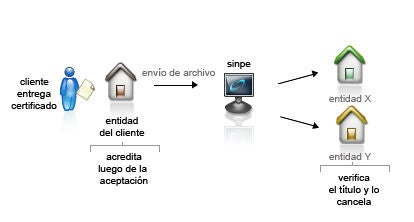
The service of Clearing of Other Securities --launched in March 2002-- is designed for financial entities to collect financial instruments other than checks, either on their clients or on their behalf.

Funds sent for collection on any given day will be credited to their beneficiaries' accounts no later than 12:00 p.m. the following working day. This timeframe is legally binding for this service. This is a key element in this service, since funds are available to clients within this timeframe, rather than in the timeframe defined by each entity.

The service provides information on the documents whose collection could not be completed, so that customers may carry out the pertinent procedures to complete collection, either through the service or through another procedure, according to the legal nature of the document.

Using the service

The service of Clearing of Other Securities may be used whenever a financial entity requires collecting a financial instrument issued by another financial entity, for example, time deposits, coupons, and any other instrument other than a check.​

Advantages

  • The timeframe of the financial entity to credit the funds into the client's account is regulated.
  • The client may file a claim with their financial entity for non-compliance with the term for credit in the funds, and if the case is not solved, the claim may also be filed with BCCR.
  • Collection procedures are improved, since the client immediately receives the information about any securities that failed to be collected.​

Example of use

An individual/juridical person whose accounts are in Bank A receives a time certificate and its coupons as payment, which was issued by Bank B, and the funds are deposited in Bank A. At the end the first day of the operation cycle, Bank A sends the collection order to Bank B, which indicates whether they can be paid or not.

If there is no problem, funds are delivered to Bank A, which in turn credits them into its client's account within the defined timeframe. If, on the other hand, there were an inconvenience and Bank B rejected the collection order, Bank A should inform so to its client.​

Imagen que muestra el flujo de compensación de un certificado

Related documents

System of Payments Regulations (Spanish)

This regulation governs the organization and operation of the National Electronic Payments System (SINPE), administered by the Central Bank of Costa Rica (BCCR), with the objective of promoting efficiency and the normal functioning of the Costa Rican payment system.

Public Debt Registry

In its role as the Nation’s cash provider, BCCR has developed a number of services to manage domestic public debt bonds, both issued by the Ministry of Finance and by BCCR itself.

Registry of Standarized Debt

The Registry of Standardized Debt administers the record of debt issued in series by the Central Bank and the Ministry of Finance.

Securities in these issuances are known as standardized securities, since those that make up one series have identical characteristics in terms of their date of issue, currency, total amount, interest rate, duration, and expiration date.

For control purposes, the service operates as a "mirror" system of the registry of issue administered by the Book Entry System (SAC, in Spanish).

Registry of Individualized Debt

The Registry of Individualized Debt administers the record of securities issued with non- standardized characteristics.

These securities are issued by the Ministry of Finance, mostly to trade deposits with public institutions. They each have specific financial characteristics such as date of issue, amount, interest rate and expiration date, thereby turning them virtually into "individualized securities".

Registry of Debt Deposits

The Registry of Debt Deposits administers the registry of time deposits traded by individuals, businesses, and financial entities with BCCR. Information from investment owners and financial conditions under which these transactions are agreed is administrated through this record.

Related documents

System of Payments Regulations (Spanish)

This regulation governs the organization and operation of the National Electronic Payments System (SINPE), administered by the Central Bank of Costa Rica (BCCR), with the objective of promoting efficiency and the normal functioning of the Costa Rican payment system.

Transferring securities

Through this service, custodian entities are allowed to transfer securities between accounts within a single entity or between securities accounts kept in different entities.

Types of transfers

Entities offering this service may engage in the following types of transfers:

  • Transfers with a change of bondholder: Bonds are transferred between different holders’ accounts. SUGEVAL has issued regulations restricting the reasons for these types of transfers.
  • Transfers without a change in bondholder: In these cases transfers do not involve a change in bondholder. Therefore, for example, an investor may change the custodian entity.

Working hours

The bond transfer service is offered within the working hours established by System of Payments Regulations.