Plantilla Word

Actions by the BCCR Concerning Climate Change
Background
Extreme weather and climate-related events can generate short-term distortions in prices, the transmission of monetary policy, and economic growth. Within the financial system, the occurrence of such events, as well as disorderly and accelerated economic transitions, may alter borrowers’ risk profiles and eventually lead to the materialization of credit risks in the financial system.
Since 2015, central banks worldwide have increasingly recognized the importance of playing a leading role, within the scope of their mandates, in integrating climate risk analysis and management into the economy in a comprehensive manner. The objective is to enhance the design of monetary and financial policies and contribute to the effectiveness of public policies, thereby enabling countries to become more resilient to climate change and its various impacts.
Climate change entails both physical risks and transition risks, which affect countries differently depending on their geographical characteristics and level of economic development. Regarding physical risks, extreme changes and fluctuations in temperature and precipitation patterns, together with the increasing frequency and intensity of tropical storms and hurricanes, have significant effects on agricultural production and supply chains. In addition, they contribute to migration flows and severely affect infrastructure across sectors.
Transition risks, on the other hand, are associated with the transformation of industries and the shift toward alternative energy sources capable of replacing current ones, as well as the adoption of innovative production methods aimed at reducing greenhouse gas emissions. This transition process may cause companies and businesses that are currently profitable and adequately resourced to experience a loss of profitability in the short and medium term.
Consequently, extreme weather and climate-related events can generate short-term distortions in prices, the transmission of monetary policy, and economic growth. Climate variability, together with disorderly and accelerated transitions, may significantly alter borrowers’ risk profiles and ultimately lead to the materialization of credit risks within the financial system.
Select the subtopic of your interest:
Constitution of GAECC
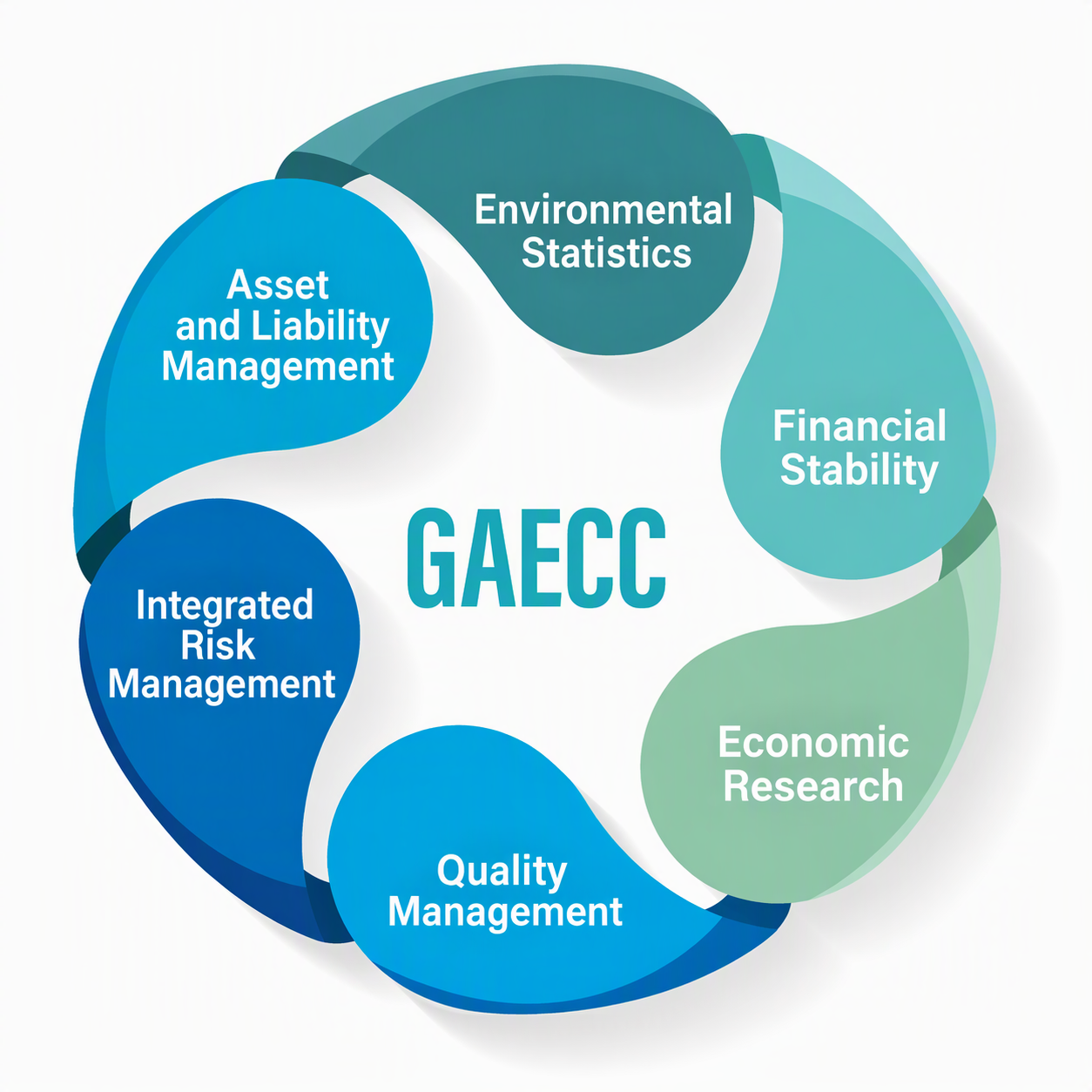
Within the framework of the actions driven by different central banks at the international level concerning climate change, the studies carried out in Costa Rica, as well as the results of the assessment of the non-financial risks of climate change regarding the activity of BCCR, since 2018, an inter-department group was created aimed at guiding the relevant authorities on the impact of climate change on the strategic goals of the Central Bank. This working team was called the Strategic Analysis Group for Climate Change (GAECC, by its acronym in Spanish), and it is made up of officials from different areas and departments. In 2022, the Management of BCCR appointed a person exclusively responsible for the coordination of the activities of the GAECC.
BCCR’s areas and departments represented in the GAECC
Objectives of the Group
- Producing economic and financial information and research, allowing for the monitoring of the impact of climate change.
- Monitoring the risks linked to the effects of climate change.
- Connecting with other national and international economic and financial agents in the area of climate change.
- Briefing the financial system on the relevance of mainstreaming the effects of climate change within risk management.
- Disseminating the information produced among the relevant interest groups to support informed decision-making.
- Channeling the exchange of knowledge with different national and international entities.
Working Areas
In accordance with the provisions in the 2020-2023 Strategic Plan and considering the challenges imposed by climate change on the country, as well as for the accomplishment of the objectives assigned to the Central Bank by its Organic Law, BCCR has established four main working keystones for the mainstreaming of climate considerations into the design of the monetary and financial policy. These working areas have been built upon the legal faculties granted to BCCR, and they are based on the following four main keystones:
Working keystones for the mainstreaming of climate change into the activities of BCCR
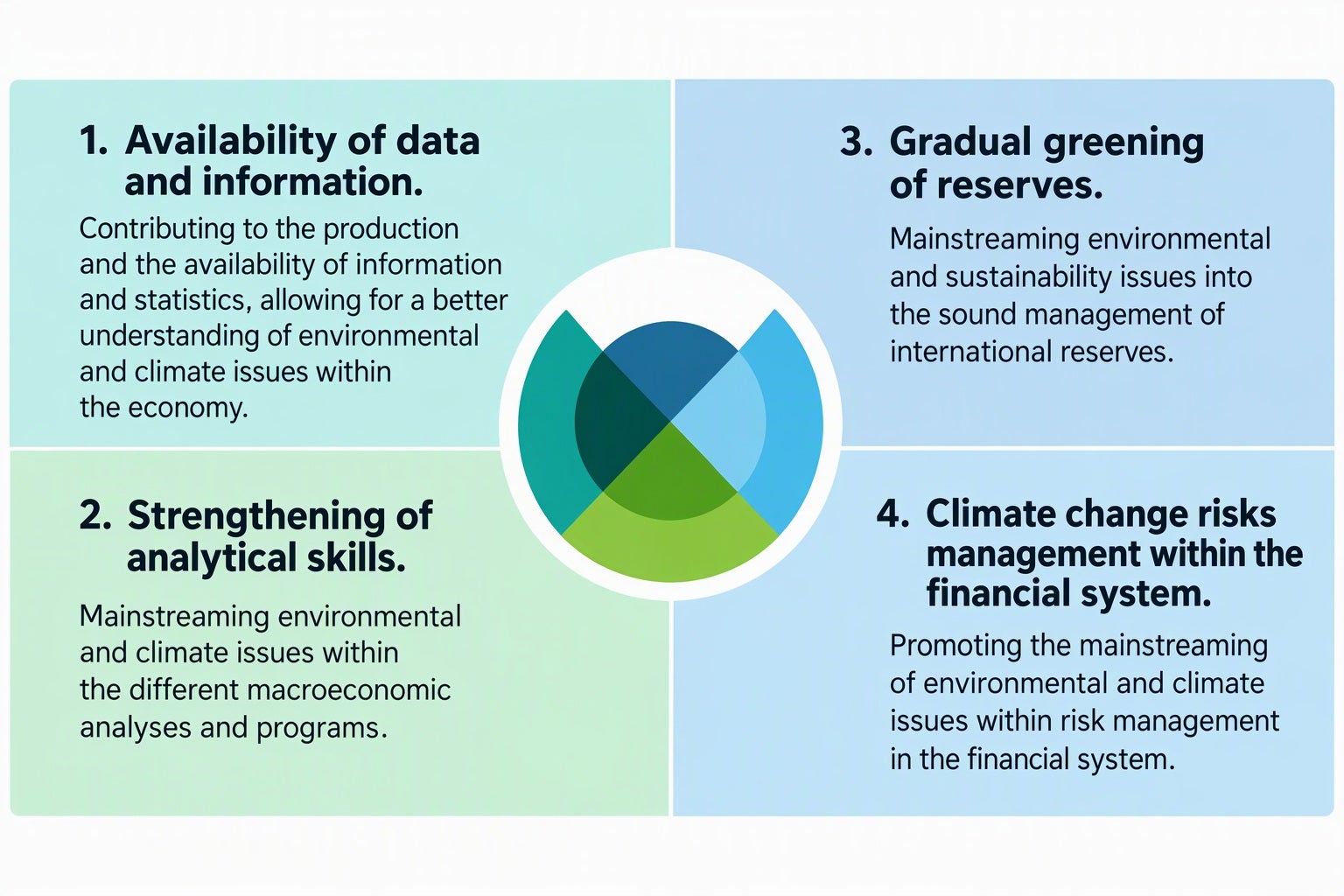
Actions linked to the four working keystones
- Identifying the needs for data and information that allow for the analysis of the impact of climate change on the objectives of the BCCR.
- Identifying indicators linked to climate change that may be a benchmark to monitor the risks against BCCR and the entire financial system.
- Studying more deeply best practices and methodologies for economic and climate modeling from the perspective of a central bank.
- Carrying out studies to assess the relationship between climate and environmental, macroeconomic, and financial variables and the risks against the financial system linked to climate shocks.
- Applying a best-in-class strategy (by promoting increased exposure for the issuers with the best environmental performance).
- Incorporating green measurements and indicators about the reserves into publications and reports linked to such reserves.
Incorporation of the BCCR into the Network for Greening the Financial System (NGFS)
In September 2019, the BCCR was included as a member of the group of central banks and supervising authorities, Network for Greening the Financial System (NGFS). This action was the result of both the Board of Directors and the Management of BCCR acknowledging the importance of focusing ideas and practices for national development towards a more sustainable economy, as well as the responsibility of the Central Bank for understanding the role of the financial entities in the transition to a resilient and low-carbon economy.
Nowadays, the BCCR participates in the meetings held by the main working groups (workstreams) of the Network, which provides it with insight into the state-of-the-art bibliographical works and modeling projects in the field of prudential supervision, microfinance, and green finance.